Showing posts with label Catholic Church. Show all posts

Friday, 30 November 2012

Blessed Bernardo de Hoyos: "The Spouse of Christ"

In Catholic spiritual tradition, there is an important and honoured place for the idea of "The Bride of Christ". At one level, we are taught to think of the Church as a whole as such a bride of Christ, and the wedding at Cana as a metaphor for the marriage of Christ to his bride, the Church. At another level, religious women think of themselves as forgoing human marriage, to become brides of Christ. The image is a powerful and valuable one, in developing that personal relationship with the Lord that we seek - but where does it leave men, who may find it difficult to imagine themselves as brides?


Surprisingly perhaps, Catholic tradition provides an equivalent route for men - at least, for gay men, and others who are not threatened by thoughts of homoerotic attraction. Gerald Loughlin has described a medieval German tradition in which the wedding at Cana was seen as celebrating the wedding of Christ and his "beloved disciple" (assumed to be John the Evangelist). St John of the Cross used extensive homoerotic imagery in his mystical writing. Blessed Bernardo de Hoyos combined both of these ideas, taking them to their logical conclusion. As Kittredge Cherry noted at Jesus in Love blog, in a valuable post for his feast day (yesterday, November 29th), Blessed Bernardo saw himself, in a mystical vision, as marrying Christ - as a man, becoming not a bride, but a "Groom of Christ".
Always holding my right hand, the Lord had me occupy the empty throne; then He fitted on my finger a gold ring.... “May this ring be an earnest of our love. You are Mine, and I am yours. You may call yourself and sign Bernardo de Jesus, thus, as I said to my spouse, Santa Teresa, you are Bernardo de Jesus and I am Jesus de Bernardo. My honor is yours; your honor is Mine. Consider My glory that of your Spouse; I will consider yours, that of My spouse. All Mine is yours, and all yours is Mine. What I am by nature you share by grace. You and I are one!”
(quoted at Jesus in Love from “The Visions of Bernard Francis De Hoyos, S.J.[Image]” by Henri Bechard, S.J.)
Kittredge observes, quite correctly,
While the Catholic church refuses to bless same-sex marriages, the lives and visions of its own saints tell a far different story -- in which Christ the Bridegroom gladly joins himself in marriage with a man.
Michael Bayley at the Wild Reed, who drew my attention to Kittredge's post, thinks that we should declare Bernardo the patron saint of Catholic for Marriage Equality, MN. Why not the patron saint of marriage equality - period?

Tuesday, 30 October 2012

Ramon Navarro ( 1899 – 1968), Victim of the Catholic Closet.

Ramon Navarro was once the leading Latin actor in movies after the death of Rudolph Valentino, starring in several major silent films and early talkies, in the late 1920's and early 1930's. He was killed on October 30th by two sex-workers he had hired from an agency,  in attempt to extort from him some of his perceived, but non-existent wealth. I see this tragic death as a sad symbol of the dangers of life in the closet, which had been forced on him by the twin pressures of his conflicts over sexuality and this Catholicism, and the constraints of the Hollywood publicists.


Those of us who are able to live out and proud in spite of the Vatican's disordered sexual teaching, are able to form sound, healthy and adult relationships. Those who live in the closet are forced to live alone in solitude, or in sham marriages - such as the system of lavender marriages imposed by Hollywood on its sex-symbol gay and lesbian stars.   

Some Catholics living alone will attempt to live a strictly celibate life in accordance with Catholic teaching - some may even succeed. Many others straddle an uneasy divide, between attempted celibacy, and sexual encounters in the closet. Especially for older men, sometimes the only feasible outlets are the seedier ones, in public toilets, or with commercial trade.  Both can be dangerous.

Ramon Navarro resisted the Hollywood pressure to enter a Hollywood marriage, and for a time was able to sustain a meaningful, but closeted relationship with his publicist, Herbert Howe, until the latter's death in 1959.

Some years later, in October 1969, he hired two brothers, Paul and Tom Ferguson (aged 22 and 17, respectively), to come to his home for sex.  Mistakenly believing that there was a large sum of money in the house, the two then assaulted and tortured Navarro for some hours, hoping to force him to reveal the whereabouts of the cash. They eventually left with just $20. Navarro died of asphyxiation, having choked on his own blood.

It is probable that what most offends opponents of the "gay lifestyle" is its association in their minds with the kind of anonymous, impersonal sexual activities that take place in public toilets, backroom bars and in commercial transactions. What they fail to observe, is that these are less typical of gay men in open and publicly affirmed partnerships, than of those who remain closeted. 

The best way to reduce the seedier, and more dangerous, elements in gay lives, is to support marriage equality.


Raymond Navarro. Wikipedia
Film Actors, Gay Male, glbtq encyclopedia
Enhanced by Zemanta

Saturday, 27 October 2012

Desiderius Erasmus of Rotterdam

Erasmus, born on the 27th October 1466, was a Dutch humanist and theologian,  who merits serious consideration by queer people of faith.

Born Gerrit Gerritszoon, he became far better known as Desiderius Erasmus of Rotterdam: Erasmus was his saint's name, after St. Erasmus of Formiae; Rotterdam, for the place of his birth (although he never lived there after the first few years of early childhood; and "Desiderius" a name he gave himself - "the one who is desired".

Erasmus, the "gay icon"?

Some LGBT activists have hailed Erasmus as a gay icon from history. Circa Club for instance has no doubt, using that precise term and including Erasmus in it's collection of historical gay icons. The primary basis of the claim is a series of passionate love letters he wrote to  a young monk Servatius Roger, and  allegations of improper advances made to the young Thomas Grey, later Marquis of Dorset, while employed as his tutor.
Others are unconvinced, pointing out that the nature of friendship between men, and the form of expressions of affection between them, were very different in Erasmus' day to ours. They also point out that there were never any direct allegations of physical relations with Grey, or with anyone else. This argument largely rests on the assumption that in a time of marked public opposition (and official persecution) of  "sodomy", any suggestion of homosexual intercourse would have provoked strong denunciation and even prosecution. I am not convinced by either side.

Erasmus was certainly not "gay" in any modern sense. The use of the term "gay icon" for any man of the Renaissance period, and particularly for a priest, is clearly anachronistic, and inappropriate. It is also true that expressions of "love" in the letters to Servatius may be no more than expressions of Platonic affection, expressed a little more effusively (but not much more so) than was customary at the time. We cannot say for certain that he was sexually active with men.

But the absence of proof also does not disprove the hypothesis. As a priest, Erasmus was expected to be celibate. There is also no evidence of sexual relations with women, but that does not disprove that he was heterosexual. The claims that the strong climate of opposition to sodomy "would have" resulted in public exposure are also invalid. Over several centuries, thousands of "sodomites" were tried and executed - but the meaning of the term was vague and variable, including everything from "unnatural" (i,e, anal or oral) intercourse between husband and wife, to witchcraft and heresy, to treason. In post-Reformation England, it was even sometimes used interchangeably with "popery", as Catholicism was also viewed as treason against the English monarchy. In fact, many of those convicted may have been the victims simply of malice and grossly unfair criminal procedures, and completely innocent of sexual non-conformity - and very many more who were indeed engaging in homosexual activities were left entirely unhindered.

The matter of Erasmus' sexual activities is at best undecided - and also irrelevant. To focus on "did he or didn't he" is to make the mistake of the homophobes, who are convinced that homoerotic relationships are all about genital sex. It is enough for me to note that whatever the physical relationship may or may not have been, there was a definite, powerful and emotionally intimate relationship between Erasmus and Serviatus.
I also like this quotation, from his "In praise of marriage":
I have no patience with those who say that sexual excitement is shameful and that venereal stimuli have their origin not in nature, but in sin. Nothing is so far from the truth. As if marriage, whose function cannot be fulfilled without these incitements, did not rise above blame. In other living creatures, where do these incitements come from? From nature or from sin? From nature, of course. It must be borne in mind that in the appetites of the body there is very little difference between man and other living creatures. Finally, we defile by our imagination what of its own nature is fair and holy. If we were willing to evaluate things not according to the opinion of the crowd, but according to nature itself, how is it less repulsive to eat, chew, digest, evacuate, and sleep after the fashion of dumb animals, than to enjoy lawful and permitted carnal relations?
-In Praise of Marriage (1519), in Erasmus on Women (1996) Erika Rummel

Erasmus, the scholarly reformer.

It is not his sexuality that most impresses me, but his legacy as a scholar and church reformer. His career spanned the years leading up to, and after, Luther's break with the Catholic Church that became the Protestant Reformation. Prior to the split, Erasmus had himself been fiercely critical of the Church, arguing forcefully for reform of the many and manifold abuses. He had close relationships with Luther and many other leading members of the Reformation movement, which his ideas strongly influenced. However, when the break came, he chose to remain formally inside the church structures, and not outside of it.

LGBT Christians are often attacked by others for remaining inside a religion which is seen as inimical to gay interests, and so to be siding with the enemy of gay liberation, but this is simplistic. Erasmus' response to the reformers was that it was the abuses that needed to be destroyed, not the church itself - an argument that applies equally strongly to the situation today, in respect of sexuality. The restricted, misguided view of sexuality promoted by some claiming the authority of religion, is not inherent in the Christian religion, but has been imposed on it to promote a particular heterosexual agenda. It is this abuse that we must oppose, not Christianity.

In doing so, we should also learn from Erasmus' methods. Among his criticisms of the Church was its heavy dependence on medieval scholastic theology, with its elaborate structure of speculative philosophy. Instead, he went back to the sources, to build his theology on a sounder structure of evidence. Recognizing the inadequacies of the Latin Vulgate bible, he devoted himself to the study of Greek, and eventually published a more reliable Latin translation (which came to replace the Vulgate, with a parallel Greek text), He also wrote a series of treatises on several of the church fathers.

Queer theologians today are doing something similar. Instead of sitting back meekly and accepting the received ideas on the Bible's supposed condemnation of homosexuality, they have gone back to the roots of Biblical scholarship, closely studying the texts in the original Hebrew and Greek, and paying close attention to the full literary analysis and contextual considerations. They have demonstrated the weaknesses of the traditional interpretations, and have earned the concurrence of many heterosexual colleagues. This reassessment of the Biblical evidence has been one of the important factors in the present moves to greater LGBT inclusion in church, as pastors or in rites for recognizing same-sex unions. Other theologians have resisted the received opposition by ignoring scholastic monolith, and going back to the source of the Christian religion - Christ himself, as revealed in the Scriptures. Others again, emphasise the importance of a personal relationship with God, through prayer, in place of unthinking deference to the human authority of clerical oligarchs.

Erasmus, the man in the middle.

In the build-up to the Reformation, Erasmus aimed to avoid taking sides in the split. His thinking was a definite influence on the reformist cause,  and was later accused of having "laid the egg that hatched the Reformation". His response was that he had hoped it would lay a different bird. He worked hard to retain good relationships with both sides and to keep the peace between them, but in the end, his reward was to be viewed with some suspicion and resentment by both sides. By Catholics, for having fostered the reformist thinking in the first place, and by Reformists for having deserted them at the end.

Queer people of faith will sympathise. We too aim to straddle two camps- and are frequently attacked from both sides: by some traditionalists Christians for our supposed sexual sin, and by secular gay activists for siding with the enemy,

May the example of Desiderius Erasmus sustain us in our endeavour.


Books:
Bray, AlanThe Friend

Related articles at Queering the Church, and at Queer Saints and Martyrs:

Friday, 16 March 2012

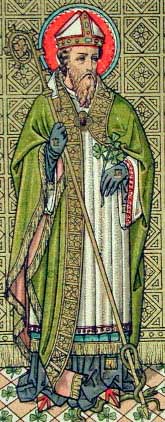
St Patrick, Gay Role Model?

So why should we see St Paddy as a gay icon?

saint-patrick

In a notable book on Irish gay history ("Terrible Queer Creatures") Brian Lacey presents some evidence that Patrick may have had a long term intimate relationship with a man:
"St. Patrick himself may have had a relationship tinged with homoeroticism. Tirechan, a late seventh century cleric who wrote about St. Patrick, tells the story of a man Patrick visited and converted to Christianity, who had a son to whom Patrick took a strong liking. Tirechan wrote that "he gave him the name Benignus, because he took Patrick's feet between his hands and would not sleep with his father and mother, but wept unless he would be allowed to sleep with Patrick." Patrick baptized the boy and made him his close lifelong companion, so much so that Benignus succeeded Patrick as bishop of Armagh."
Going backwards in his life, I have seen elsewhere a report* that after his escape from slavery and return to Britain, he supported himself by working for a time as a prostitute  - yes, good old Patrick sold sexual favours.
Does this sound far fetched? Not if you consider the historical realities of the time.  Patrick's home was in Roman Britain. throughout the Empire, prostitution was an entirely acceptable way for men or women in desperate circumstances to make a living. Consider also his likely experience as a slave.  In both Roman and Greek society, as well as elsewhere, it was assumed that one of the duties of a slave, particularly if young or attractive, was to provide sexual services on demand.  Ireland was not under Roman rule, but there is no reason to suppose that the conditions of slavery were notably different.  (Lacy shows in his book that in pre-christian Ireland same sex relationships were accepted and respected.)
There is another reason, though why we as queer Catholics should look to Patrick as a role model, regardless of his own sexual history, a reason which goes to the heart of his mission.
In "Faith Beyond Resentment",  theologian James Alison observes that in the Gospel story of the healing of the man possessed by demons, Jesus instruction to the man after healing was to "Go home," that is, back to the community which had tormented and rejected him, back to his persecutors.
This is what Patrick did.  Having escaped from slavery and returned to his original home, he responded to what he saw as a call to return to the country of his captivity, to go back to the land of his tormentors - and convert them.
So he did, and so, I think, must we.  Tormented and persecuted we have sometimes (but not always) been by the Catholic Church. Somehow, though, we must find a way to move beyond the anger that provokes, to set aside the resentment, and to "go home to" the church. Thereby we will contribute to its own conversion.
*  In a comment to an earlier posting of this piece, theologian JohnMcNeill has said that he thinks the book with this story was "How The Irish Saved Civilization", by Thomas Cahill. "He claims that Patrick paid for his passage back to Ireland by servicing the sailors on the boat."
Enhanced by Zemanta

Wednesday, 22 February 2012

Saint Walburga

National Catholic Reporter reminds us today that it is the feast of the early English saint, Walburga, who entered the abbey of Wimbourne aged just eleven, then as a young sister was sent to accompany her uncle St Boniface to Germany, where they founded the "double monastery" of Heidenheim.


Read the full report , "Feb 25th, St Walburga, Missionary, Abbess," at National Catholic Reporter. As you do so, pay close attention:  the text reminds us of so much that we have forgotten about the real history of women in the Church.

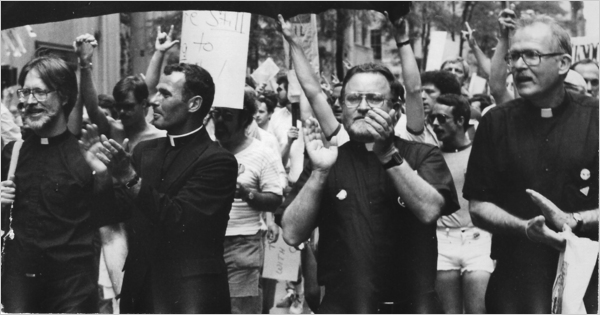
Feb 22: Robert Carter, Priest and Gay Activist

Fr Robert Carter SJ died a year ago today, making Feb 22, in Catholic tradition, his "dies natale", or day of (new) birth. He deserves to be remembered as one of the earliest activist, openly gay Catholic priests:
“Since Jesus had table fellowship with social outcasts and sinners, those rejected by the religious establishment of his time, I consider myself to have been most fully a Jesuit, a ‘companion of Jesus,’ when I came out publicly as a gay man, one of the social rejects of my time. It was only by our coming out that society’s negative stereotypes would be overcome and we would gain social acceptance.”
-Fr Robert Carter
There is no contradiction between being Catholic and gay or lesbian. Indeed, just as Robert Carter says he was most fully a Jesuit when he cane out publicly, so for many of us, we are most fully Catholic when we too come out in Church.  (I say deliberately "for many of us", as coming out is always a deeply personal decision, which may not always be feasible for all.)

Robert Carter, Priest and Gay Activist, Dies at 82

The Rev. Robert Carter, who in the early 1970s was one of the first Roman Catholic priests in the country to declare publicly that he was gay and who helped found the National Gay and Lesbian Task Force, died on Feb. 22 in the Bronx. He was 82.
Robert Carter, right, with Dan McCarthy, left, Bernard Lynch and John McNeill at a gay pride march in the early 1980s 


Tuesday, 14 February 2012

Valentine’s Day: Same Sex Lovers in Church History

For St Valentine's day,we should remember the same sex lovers (a surprising number of them) who feature in Scripture and in the history of the Catholic Church.  In the list below, I do not not claim that the relationships were necessarily sexual (although some of them most definitely were, but all are deserve attention by modern queer Christians. (For fuller assessments, follow the links).

SS Sergius & Bacchus, Gay lovers, Roman soldires, martyrs and saints.

Monday, 23 January 2012

"Alfredo's Fire": The Self- Martyrdom of Alfredo Ormando

In January 1998 Alfredo Ormando, an Italian writer, set himself on fire in St Peter's Square in the heart of the Vatican. Ormando was Catholic, and gay.


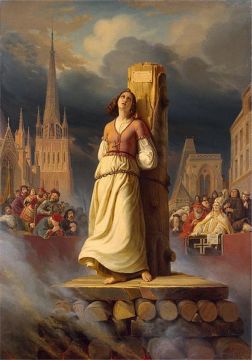
In Catholic hagiography, the most famous image of a martyr burned at the stake is that of St Joan of Arc, condemned by the approved theologians of the Church as a heretic and martyred by the church, essentially for her transgression in dressing as a man. In the centuries that followed, thousands more were burnt as sodomites. These were viewed by the church as irredeemable sinners - but later history may come to view them differently. The church now views Joan as a canonized saint. Pope Benedict has explicitly acknowledged the clear lesson - official theologians may be wrong. In years to come, those burnt for sodomy may also come to be more widely recognized as collective martyrs - martyred by the church, for the nature of their love.  In his horrifying echo of the centuries - long great persecution of sexual minorities, Alfredo Ormando's suicide after years of attempting to stifle his sexuality in accordance with Vatican rules, may be seen as a unique act of self-martyrdom.


Thursday, 12 January 2012

12th January: St Aelred of Rievaulx, Patron of Same Sex Intimacy

St Aelred,  whose feast we celebrate today, is recognised in all sources as an important English saint, who lived in the north of England in the 12 C. As a young man, he joined the Cistercian abbey of Rievaulx, later returning there as Abbott.  He is remembered especially for his writings on friendship, some of which have led gay writers such as John Boswell to claim him as 'homosexual'. For instances, Integrity USA, an Anglican LGBT organisation, have designated him as their patron. From the website of Integrity, this Collect for the feast of Aelred:


Collect

Pour into our hearts, 0 God, the Holy Spirit's gift of love, that we, clasping each the other's hand, may share the joy of friendship, human and divine, and with your servant Aelred draw many into your community of love; through Jesus Christ the Righteous, who lives and reigns with you in the unity of the Holy Spirit, one God, now and for ever. Amen.

Saturday, 24 December 2011

John Boswell

b. March 20, 1947
d. December 24, 1994

John Boswell was an esteemed historian who argued that homosexuality has always existed, that it has at times enjoyed wide social acceptance, and that the Church historically allowed same-sex unions.

"It is possible to change ecclesiastical attitudes toward gay people and their sexuality because the objections to homosexuality are not biblical, they are not consistent, they are not part of Jesus' teaching; and they are not even fundamentally Christian."


John Boswell was a gifted medieval philologist who read more than fifteen ancient and modern languages. After receiving his PhD from Harvard in 1975, he joined the history faculty at Yale University. Boswell was an authority on the history of Jews, Muslims, and Christians in medieval Spain. He helped to found the Lesbian and Gay Studies Center at Yale in 1987. In 1990 he was named the A. Whitney Griswold Professor of History.

In 1980 Boswell published the book for which he is best known: Christianity, Social Tolerance, and Homosexuality: Gay People in Western Europe from the Beginning of the Christian Era to the Fourteenth Century. In this groundbreaking study, Boswell argued against "the common idea that religious belief-Christian or other-has been the cause of intolerance in regard to gay people." The book was named one of the New York Times ten best books of 1980 and received both the American Book Award and the Stonewall Book Award in 1981.

Boswell's second book on homosexuality in history was The Marriage of Likeness: Same-Sex Unions in Premodern Europe, published in 1994. In it he argues that the Christian ritual of adelphopoiia ("brother-making") is evidence that prior to the Middle Ages, the Church recognized same-sex relationships. Boswell's thesis has been embraced by proponents of same-sex unions, although it remains controversial among scholars.

John Boswell converted to Roman Catholicism as an undergraduate at the College of William and Mary, and remained a devout Catholic for the rest of his life. He was an effective teacher and popular lecturer on several topics, including his life journey as an openly gay Christian man.

Boswell died of AIDS-related illness on Christmas Eve in 1994 at age 47.

Bibliography:
Selected works by John Boswell:
Enhanced by Zemanta

Wednesday, 9 February 2011

Pope Benedict, on the Queer Lessons in the Church's Martyrdom of St Joan.

At Enhanced Masculinity, I came across a post which reported on an address by Pope Benedict about the martyrdom and later canonization of St Joan of Arc. I was pleased to see this, as I have written before of the importance of Joan as a queer saint who was first martyred by the church, and later rehabilitated and honoured. Much the same will surely occur in time to those modern queer heroes who have been professionally martyred, by the Church which has deliberately destroyed their careers, for the great sin of attempting to speak the truth on sexual ethics or LGBT inclusion.


So, in addition to the significance of this address to my own arguments about the relevance of the queer saints and martyrs, it also relates to the current theological ferment on sexual ethics and widespread criticism of the institutional church. When I then crossed to the Vatican website and read the address in full, I found even more in Pope Benedict's words that can guide and inspire gay in lesbian Catholics in our struggles to withstand the hostility of the traditional, disordered teaching on homoerotic relationships.

Tuesday, 21 December 2010

Modern Heroes: Bernard Lynch

I have serious reservations about any plan to out all gay Catholic priests, as described on the website of Church Outing I firmly support the principle of outing those who actively campaign against us, but particularly bishops, senior clergy, and individual priests who clearly ally themselves with the church’s public stance. However, for the rest, we should remember that we do not what individual priests are saying to people where it matters, in private. Silence need not mean consent: it can also indicated passive resistance. Recognising also the immense personal cost that can be involved for individual priests to come out, I prefer take the opposite route. Rather than naming and embarrassing those who would prefer to remain private, I would like to pay tribute to the great courage and honesty of those few who have indeed come out.


I would like to begin by introducing you to the London priest for Bernard Lynch, who was one of the founders of the Soho Masses 10 years ago, and who rather conveniently for me, unintentionally outed himself on national television on Saturday night. (Conveniently for me, because I can now write about this with full confidecne that I am not giving anything away. As he said to me after Mass last night, it can’t get him into any more trouble with the diocese than he is already in.) Now when I say he outed himself, I do not mean outed as a gay man, or even as a gay priest. No, he did that many years ago. Nor by “unintentionally” do I imply that he would prefer to remain private. No, he regularly introduces himself and his status fully and frankly. However, it was totally unintentional, as he had no idea the cameras and mic were running. This is how I chanced to see it.
My partner Raymond and I were at home on Saturday evening watching a BBC documentary on the English playwright Allan Bennett. (Raymond is a huge Bennett fan). One sequence showed Bennett as a guest of honour at the opening of new premises for a north London health centre. After the speechifying, there were background shots of the assembled crowds – and suddenly I saw Bernard in the centre of my screen. Briefly, he found himself introducing himself to the playwright, with the words, “I’m a gay man… and married”. Then, just before the camera moved on, he added, “and a Catholic priest.” Fr Bernard Lynch, introduced to the viewers as not just gay, not just a gay priest, but gay and legally married to his husband Billy.
Bernard’s honesty though has come at great personal cost. Years ago, while working in New York, he came under intense pressure as an openly gay priest, doing extensive pastoral work among people with AIDS, even facing prosecution for alleged improper behaviour with boys in the school where he was chaplain – allegations which were clearly shown to have been without foundation, and may well have been fabricated with malicious intent. (how ironic is that, when so many genuine abusers identified by the bishops have never faced criminal charges, and have simply been transferred or placed on “administrative leave”?)
Now based in London, Fr Bernard has a fraught and tense relationship with the local diocesan authorities, who refuse to grant him faculties to say Mass in a Catholic church. He does however, have the support of his order, and so is able to pursue a priestly ministry in private, especially as a spiritual director and psychotherapist.
Although I was living on the wrong side of London for it to be really viable, I did see Fr Bernard myself for a while for some direction, which I always found enriching and deeply thought-provoking. He had one key question which he asked on every occasion: “Where have you found joy? For joy is the unfailing sign of the Holy Spirit”. This observation I always found useful and enlightening then – and still do now.
Thank you, Fr Bernard Lynch.
Enhanced by Zemanta

Friday, 3 December 2010

Saints Polyeuct and Nearchus, Jan 9th

The story of the Roman soldiers Sergius and Bacchus is well known. Polyeuct and Nearchos were similar. They too were also Roman soldiers, martyred because of their Christian faith, and in love with each other. Metaphrastes described them as one soul in two bodies, joined by boundless love. Polyeuct converted to Christianity because Nearchos was going to be executed for being Christian. Polyeuct wanted to be executed with him so that their souls would be united forever in the kingdom of heaven.


There names were paired together by early Christians as a same-sex couple, and invoked as such in the "adelphopoiia" ceremonies, recently discussed by historian John Boswell as indicating a Christian tradition of exclusive and publicly recognized same-sex unions. St. Polyeuctus had a huge church, modeled after the Temple of Solomon, built in his name in 6th century Constantinople.


Select bibliography
Boswell, John, Same-Sex Unions in Premodern Europe
O.Neill, Denis, Passionate Holiness: Marginalized Christian Devotions for Distinctive People


Enhanced by Zemanta

Monday, 1 November 2010

Nov 1st: All (Gay) Saints

Today is the feast of All Saints.  For us as gay men, lesbians in the church, this begs the obvious questions: are there gay saints?  Does it matter?
Some sources say clearly yes, listing numerous examples. Others dispute the idea, saying either that the examples quoted are not officially recognised, or denying that they wer gay because we do not know that they were sexually active.  Before discussing specifically LGBT or queer saints, consider a more general question.
Who are the “Saints”, and why do we recognise them?
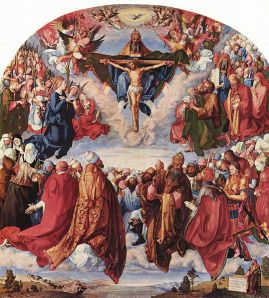
All Saints Albrecht  Dürer
All Saints : Albrecht Dürer
Richard McBrien gives one response, at NCR on-line:
There are many more saints in heaven than the relatively few who have been officially recognized by the church.
“For every St. Francis of Assisi or St. Rose of Lima there are thousands of unknown and long forgotten mothers and fathers, sisters and brothers, grandmothers and grandfathers, aunts and uncles, cousins, friends, neighbors, co-workers, nurses, teachers, manual laborers, and other individuals in various kinds of occupations who lived holy lives that were consistent with the values of the Gospel of Jesus Christ.
“Although each is in eternal glory, none of their names is attached to a liturgical feast, a parish church, a pious society, or any other ecclesiastical institution. The catch-all feast that we celebrate next week is all the recognition they're ever going to receive from the church.”
“The church makes saints in order to provide a steady, ever renewable stream of exemplars, or sacraments, of Christ, lest our following of Christ be reduced to some kind of abstract, intellectual exercise.
Two things are important here, especially at this feast of "all" saints: the category of saints is far larger than just those who have been recognised by a formal process; and the reason for giving them honour is to provide role models. It is not inherent to the tradition of honouring the saints that they should be miracle workers, or that we should be praying to them for special favours – although officially attested miracles are part of the canonization process. This formal process did not even exist in the early church:  it was only in the 11th or 12 the century that saint making became the exclusive preserve of the Pope.
It now becomes easier to make sense of the gay, lesbian and transvestite saints in Church history, and their importance for the feast of All Saints.

Sunday, 27 June 2010

St Paul's Celebration of God's Gift of Sexuality.

The standard view of sex and the Bible is that sexuality must be reigned in, and restricted to the confines of marriage. The standard view, says Norwegian scholar Reidulf Molvaer (Two Making One : Amor and Eros in Tandem), is wrong.
St Paul (El Greco)
"Dominant views about sex have in most churches been distorted by centuries of negative accretions and become travesties of what we find in the Bible." - Dr. Reidulf Molvaer. In this book Dr. Reidulf Molvaer attempts to recapture the joyful, cheerful abandon in legitimate sexual relationships that we see in the Bible-yes, the Bible! From the Song of Solomon in the Old Testament to Saint Paul's advice on intimacy in the New Testament, you are presented with the real meanings of these ancient texts and learn why the Church has interpreted the Song as an allegory rather than as a description of the joyous sexual experience it truly is. Could there be any greater glorification of sex than to let ideal love between man and woman illustrate the union between the devout and the divine? Dr. Molvaer demystifies "fairytale images" of the Virgin Mary, compares biblical sexual ethics to various cultures and discusses tales of eccentrics who have been elevated to sainthood. This book rediscovers what has been misrepresented for generations and encourages Christians and others to think afresh about one of the greatest and most disputed acts of devotion found in the Holy Bible.