Wednesday, 24 October 2012

Jerome Duquesnoy II , Burned October 24th, 1654

On 24th October, 1645, the sculptor Jerome Duquesnoy II was bound to a stake in the Grain Market in the center of Ghent, strangled and burnt. His crime (which he strenuously denied) was sodomy, with two boys, assistants who had been working with him on what should have been his masterpiece , the mausoleum of Antoine Triest, bishop of Ghent.

From a modern perspective, the issue here is that of child abuse, but that is not the way it would have been seen in the 17th century: similar activities with girls of the same age would have passed without comment. The issue then was same-gender sexual activity. The age of his partners was of minor importance - in many similar cases, the boys were also punished for their part in the "crime". In common with thousands of other men between the fourteenth and early nineteenth centuries, he was executed for no other reason than the allegation that his sexual life was directed at his own sex.

Most of these men are known to us only by the sketchiest of details, but with Duquesnoy we know more than with most, thanks to his family background, and his own artistic legacy. His father, also Jerome Duquesnoy, was a notable sculptor, famed today for the statue "Mannekin pis", so beloved of tourists in Brussels. Jerome II, and his brother François , were also sculptors, like their father.

François today has a definite place of his own in art history: his brother Jerome in all likelihood would have done so too. Like his brother, he served an apprenticeship in their father's workshop, and studied alongside François in Rome, under some of the greatest sculptors of the age. Later, he attracted the attention and patronage of powerful figures, including the king of Spain, and the bishop of Ghent, before the accusations and subsequent execution abruptly ended his career.

His reputation as a sculptor was tarnished by the circumstances of his death. In common with the practice of the time, his name was removed from many of his works, and his career literally was forgotten, but he is now re-emerging from the artistic shadows as a result of work by dedicated twentieth-century scholars. :

Infant Hercules
struggling with a serpent
The execution of the Belgian sculptor Jérôme Duquesnoy the Younger (1602-1654) must have served as a warning to other artists about the consequences of any "improprieties" in their lifestyles or their works. Although his reputation is today eclipsed by that of his elder brother, François, Jérôme Duquesnoy was widely regarded as a prominent sculptor during his lifetime.

.....Duquesnoy's exuberant and appealing statues of young boys, such as Hercules Fighting with Serpents (ca 1650), attest to his sexual proclivities, which led to his downfall. In the Pietà (ca 1640), he envisioned a beautiful young angel, passionately kissing the arm of a sensual Christ.
Richard B Mann, glbtq encycloedia

...... he produced such famous works asGanymede and the Eagle of Jupiter (ca 1540-1545) andChildren and the Young Faun (ca 1542-1547). Many of Duquesnoy's works depict strong, muscled male figures in the Hellenic tradition, the polished bronze often seeming to mirror the sculptor's innate fondness for the form he was creating.
For centuries after his death, Duquesnoy's reputation was both tarnished and repressed, and it is only recently that his works have enjoyed critical attention. A sculptor of remarkable talent, Duquesnoy's vigorous body of work finally serves to celebrate that talent rather than stand as a reminder of the sad end to a very promising career.
 Michael G. Cornelius, glbtq encycopedia

Enhanced by Zemanta

Saturday, 13 October 2012

Théodore Beza, Calvinist Theologian and Church Reformer (June 24, 1519 - October 13, 1605)

If Théodore Beza had been Catholic, and honoured as a saint, the October 13th would be regarded as his "die natale", or day of new birth in heaven. He was not Catholic, but a Calvinist pillar of the Reformation, and so definitely not a recognized Catholic saint. He is honoured by Calvinists for his reformist theology, and deserves to be remembered by modern gay and lesbian Catholics as one of us: he had  a male lover, Audebert, at a time when the Swiss Calvinists of Geneva were burning sodomites as enthusiastically as the Inquisition had done earlier in Spain and Italy.
Théodore De Bèsze, born at Vezelay (8 miles west-south-west of Avallon), in Burgundy, settled at Geneva, where he worked with Calvin, and succeeded him in 1564, as head of the reformed church at Geneva, a post he resigned in 1600. He wrote in defence of the burning of Servetus (1554), translated the New Testament into Latin, and presented in 1581 a 5th century Graeco-Latin manuscript of the Gospels and the Acts, the Codex Bezae, to Cambridge university.
His lover was Audebert. He published a collection of Latin poems, a book of amorous verse, Juvenilia (1548), which made him famous, and he was everywhere considered one of the best Latin poets of his time. In a poem in this collection, De sua in Candidam et Audebertum benevolentia he tells he is uncertain if to hug his friend Audebert or his friend Candida... and he concludes he embraces both of them, even though he prefers Audebert.

Tuesday, 9 October 2012

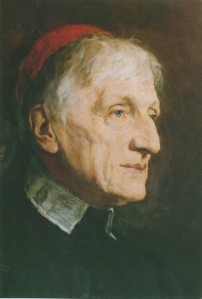
Saint John Henry Newman?

Blessed John Henry Newman was beatified by Pope Benedict XVI at a Mass in Cofton Park, Birmingham on Sunday 19 September 2010. At the request of the Bishops he has been included in the National Calendar for England on 9 October as an optional memorial.

cardinal-newman-ouless-405x600

Newman deserves particular attention from LGBT Catholics for two reasons:

Monday, 8 October 2012

Hildegard of Bingen: Doctor of the Church

With the news that Hildegard of Bingen is one of the two people that Benedict has just named as doctors of the church, I repost below a portion of my post on her, in my series on "Queer Saints and Martyrs".
Hildegard's name is one to be reckoned with. Although today we usually use the term "Renaissance Man" to indicate one with a wide range of learning to his credit, perhaps we should also recognize in a similar way some extraordinary medieval women -such as Hildegard, and others who entered convents and applied themselves with distinction to learning over many fields.


I have known a little (very little) about Hildegard for some time, and have come across suggestions of her possible lesbianism, but have not had enough knowledge to write about her myself. I was delighted then to find that my colleague Kittredge Cherry has done some digging, and produced a wonderful extended post on this great woman.
 We need to be careful though not to confuse this undoubted emotional attachment with a sexual relationship. The medieval church sanctioned and publicly approved many particular friendships between monks, and between nuns. These were not necessarily sexual. Although some undoubtedly were, others equally certainly were fully celibate. Indeed, there is much of value to reflect on in this connection, of relevance to modern gay men and lesbians.
Kittredge Cherry, in the the post I took as my starting point, stated that "Some say she was a lesbian because of her strong emotional attachment to women". Sexuality, and its expression as emotional or sexual attachments, are two distinct issues. In modern terms, it is perfectly possible to be both gay and celibate (as a notable proportion of Catholic priests are), just as it is possible to be heterosexual in orientation, but celibate.
There is a problem here in the use of the word "lesbian", a word, like "gay", which perhaps has inappropriate connotations when applied to earlier historical periods. However, what Kittredge has drawn attention to, and that I see as important, is the undeniable evidence of a powerful emotional (not sexual) attachment to women - and to one in particular.
With her newly elevated status, which draws attention to the enormous but neglected contributions of so many influential women, we also need to take another look at her specifically religious contribution. Sadly, I am unable to do this today - but will return to it later.
Enhanced by Zemanta

Sunday, 7 October 2012

Sergius & Bacchus, October 7th: Patron Saints of Gay Marriage?

Sergius and Bacchus are by a long way the best known of the so-called gay or lesbian saints - unless we include as "saints" the biblical pairs David and Jonathan, and Ruth and Naomi.  We need to be careful with terminology though: the word "gay" can be misleading, as it certainly cannot be applied with the same connotations as in modern usage, and technically, they are no longer recognised as saints by Western church, as decreed by the Vatican - but they are still honoured by the Orthodox churches, and by many others who choose to ignore the rulings of Vatican bureaucrats. The origins of saint-making lay in recognition by popular acclaim, not on decision by religious officials.

Whatever the quibbles we may have, they remain of great importance to modern queer Christians, both for their story of religious faith and personal devotion, and as potent symbols of how sexual minorities were accepted and welcomed in the earliest days of the Christian community.

They are particularly important in the movement to marriage equality, for their significance in early rites of blessing same-sex unions in church, which may point a way to making a modern provision for something similar without necessarily changing the traditional understanding of church marriage to that between a man and a woman - with its link to child-bearing.

(And, as I have written before, I have a very special personal connection with this pair of early saints and martyrs for the faith. Like so many queer Catholics, it never occurred to me that there could even exist gay or lesbian Catholics until I heard of SS Sergius and Bacchus. Some months after first hearing of them, I read their story in John Boswell, and wondered when was their feast day. I investigated - and found by wonderful serendipity that it was that very day. That began for me a continuing exploration of the other LGBT saints, of the rest of gay history in the churches, of more general gay and lesbian theology - and  this blog. By further serendipity, I discovered this week that today, the feast day of Sergius and Bacchus, is also the birthday of  - Dan Savage, well known for his work to combat homophobic teen bullying.  If Serge and Bacchus may be regarded as patrons saints of gay adults, is Dan Savage a modern patron saint of gay teens?).
A modern icon of Saints Sergius and Bacchus by...
A modern icon of Saints Sergius and Bacchus by the gay, Franciscan iconographer Robert Lentz (Photo credit: Wikipedia)

The Lovers' Story

Sergius and Bacchus were third /fourth century Roman soldiers, and lovers. This alone is worth noting in any discussion of homoerotic relationships and the early Christians: in the Roman world, as in most of the Mediterranean region, such relationships were commonplace. What mattered in questions of sexual ethics and social approval (or otherwise) had little to do with the gender of the partners, but with their respective social status.

They were of high social standing, good enough to have a close personal relationship with the emperor, Tertullian. This provoked jealousy. They were also Christians, which gave their enemies a useful pretext to denounce them to the Emperor. He ordered them to offer sacrifice to the Roman gods, which they refused to do. Their refusal provoked the wrath of the emperor, who began to exact a series of penalties, culminating in the sentence of death. The first to be killed was Bacchus, who was flogged to death. Serge was subjected to further torture, before being killed himself. The fifth century "Passion of Sergius and Bacchus" describes many details, and also some supposed miraculous interventions, such as the dead Bacchus appearing to Sergius in a vision, where he admonished his partner for grieving, and promised that they would soon be together again:
Why do you grieve and mourn, brother? If I have been taken away from you in body, I am still with you in the bond of union, chanting and reciting, "I will run the way of thy commandments, when thou shall enlarge my heart".  
Boswell makes two points about the trial and passion of Sergius and Bacchus that are especially relevant to their significance for queer Christians: in all the legal and theological arguments over the charges against them, the matter of their relationship was simply not an issue. The complaint was that they had refused to honour pagan gods. Their sexuality was of no consequence at all. Later, when the Greek hagiographer has the dead Bacchus appear to Sergius to comfort him with the prospect of paradise, the greatest joy of the promised afterlife is to be reunited with his male lover. Neither the Roman jurists, nor the fifth century Christian writer who recorded the passion, have anything at all to say against the relationship - and the Christian celebrates the quality and value of their love.

Sergius and Bacchus & Gay Marriage

It is simply historically untrue that marriage has always been between one man and one woman, or that same-sex marriage is a modern invention. Among many counter-examples that easily disprove that belief, is the tradition of liturgical blessings, in church, of same-sex unions as described by the ground-breaking historical work of John Boswell. While these were not in any way an exact counterpart to modern marriage (nor were heterosexual unions from the same period), they do no need to be considered carefully in modern responses in faith to the questions around marriage and family equality. Sergius and Bacchus are significant here, for being mentioned by name in many of the liturgies for these rites that have survived, along with numerous other, less familiar examples of same-sex couples from church history.

There are also surviving texts of ancient and medieval hymns to the couple. Boswell quotes one from the sixth century, which has the opening verse ,
Of Serge and Bacchus,
the pair
filled with grace
,

let us sing, O ye faithful!
Glory to Him who worketh
through his saints
amazing and wonderful deeds! 
The full hymn is too long to quote here in full, but one verse in particular emphasises the importance of their mutual devotion:
It was not desire for this world
that captivated Serge for Christ,
nor the empty life of worldly affairs
[that captivated] Bacchus;
rather, made one
as brethren
in the bond of love
they called out valiantly to the tyrant,
"See in two bodies
one soul and and heart,
one will and virtue.
Take those that yearn to please God.
Glory to Him who worketh
through his saints
amazing and wonderful deeds!
The words "made brethren" in this verse are a reference to the literal translation of the greek name for the rite, that of "making brothers".  This has been taken by some commentators as disproving Boswell's claim that these rites have any connection to marriage, and are instead simply a joining in spiritual brotherhood. (A claim that Boswell himself anticipated and countered in the text himself).

Whatever the original connotation of the words though, that there was some concept of marriage involved is clearly shown by another hymn from the ninth century, quoted and discussed at "Obscure Classics of Latin Literature", on a page for Carolingian poetry.

Hymn of SS. Sergius and Bacchus

– spuriously attributed to Walahfrid Strabo (c. 808 – 849 CE)
I. O ye heavens, draw up the marriage contract as our voices resound with odes
And let us make manifest the gracious rewards of the Lord.
We who are below shall celebrate the saints with an illustrious hymn
From our very hearts.

II. Holy martyrs shining by virtue of your merits, Sergius and Bacchus,
As partners you wear God's crown, you have transcended
Together the enclosure of the flesh; and now you are
Above the stars.
"O ye heavens, draw up the marriage contract" seems pretty explicit, to me.

Glory to Him who worketh
through his saints
amazing and wonderful deeds!


Indeed.

(At Jesus in Love, Kittredge Cherry has a fascinating post on depictions of Sergius and Bacchus in art, featuring in particular a wonderful stained glass window of the pair, at St. Martha’s Church in Morton Grove, Illinois. This was donated to the church by its LGBT parishioners, and is believed to be the only representation of them in any United States Church).

Books

Boisvert, Donald: Sanctity And Male Desire: A Gay Reading Of SaintsCatholic Saints Books)

Boswell, John: Same-Sex Unions in Premodern Europe

Jordan, Mark: Authorizing Marriage?: Canon, Tradition, and Critique in the Blessing of Same-Sex Unions

O'Neill, Dennis: Passionate Holiness: Marginalized Christian Devotions for Distinctive People

O'Sullivan, Andrew: Same-Sex Marriage: Pro and Con: A Reader

Related articles

Enhanced by Zemanta

Friday, 5 October 2012

Queer Francis of Assissi: Breaking Boundaries

At Jesus in Love, Kittredge Cherry has uncovered more ground-breaking work on opening up the previously hidden history of queer elements in the lives of the saints - in this case, Francis of Assisi, whose feast day was yesterday, October 4th. The evidence she has quoted, comes from an unpublished master’s thesis “Gender Liminality in the Franciscan Sources” by the Franciscan scholar, Kevin Elphick.

St. Francis of Assisi (circa 1182-1220)

Reference to "queer" elements in the story and example of Francis are not intended as equivalent to the modern term "gay", which would be completely anachronisitic, or to imply any specific sexual activity. We must always remember that although some writers use "queer" loosely as a synonym for gay and lesbian, or for the acronym LGBT, in fact it's application in queer studies, and in queer theology, is much broader. Correctly used, the term does not refer to any specific sexual orientation or gender identity, but to a complete rejection of arbitrary definitions for sexuality or gender. In this sense, it is about breaking down boundaries - including boundaries outside of sex and gender, such as ethnicity, race or class.

So it is, that the Gospel message of radical inclusion and equality for all, is intrinsically a very queer one indeed. The theologian Robert Goss, who is identified by Elisabeth Stuart as initiating the transition from gay and lesbian theology to queer theology, rooted his thinking firmly in Christology, as indicated by the titles of two of his books, "Jesus Acted Up", and "Queering Christ".  St Francis of Assisi is renowned for his passionate commitment to embracing this Gospel message of breaking down boundaries, and an embrace of a materially simple life in imitation of Christ's own. To see him as "queer" in this broadest sense, follows naturally.

The queer identity of both Francis and Christ, his model, is neatly illustrated in an image posted by Kittredge, of Francis embracing a Jesus with AIDS, on the cross. I quote here Kittredge's description of Francis, and of the image:
Francis was born to a wealthy Italian family in 1181 or 1182. As a young man he renounced his wealth, even stripping off his clothes, and devoted himself to a life of poverty in the service of Christ. He connected with nature, calling all animals “brother” and “sister” and celebrating them in his famous Canticle of the Sun.
He saw the face of Christ in lepers, the most reviled outcasts of his time, and nursed them with compassion. William Hart McNichols puts Francis’ ministry into a contemporary context by showing him embracing a gay Jesus with AIDS in “St. Francis ‘Neath the Bitter Tree,” pictured here. Words on the cross proclaim that Christ is an “AIDS leper” as well as a “drug user” and “homosexual,” outcast groups at high risk for getting AIDS. The two men gaze intently at each other with unspeakable love as Francis hugs the wounded Christ. It was commissioned in 1991 by a New Jersey doctor who worked with AIDS patients, and is discussed in the book Art That Dares: Gay Jesus, Woman Christ, and More by Kittredge Cherry.
“St. Francis ‘Neath the Bitter Tree”
By William Hart McNichols © fatherbill.org

Kittredge's post goes further, noting that Elphick's thesis shows how some aspects of Francis' life were "queer" even in a narrower sense, breaking down gender boundaries in particular, applying female terms to men, and male terms to some women admitted as brothers in the male community (a reminder here, of the  earlier biologically female saints who lived as men, in male monasteries).
Other Franciscan friars referred to Francis as “Mother” during his lifetime. He also liked to be greeted as “Lady Poverty.” He encouraged his friars to live as mothers with children when in hermitage together, and used other gender-bending metaphors to describe the spiritual life.
Francis allowed a widow to enter the male-only cloister, naming her “Brother Jacoba.” (Details about Jacoba are at the end of this article.) His partner in ministry was a woman, Clare of Assisi, and he cut her hair in a man’s tonsured style when she joined his male-only religious order.
There is also evidence of an emotionally intense relationship with another man, described in the earliest known biography of Francis, by one of the saints own followers, who knew him personally:Francis allowed a widow to enter the male-only cloister, naming her “Brother Jacoba.” (Details about Jacoba are at the end of this article.) His partner in ministry was a woman, Clare of Assisi, and he cut her hair in a man’s tonsured style when she joined his male-only religious order.
 “Now there was a man in the city of Assisi whom Francis loved more than any other, and since they were of the same age and their constant association and ties of affection emboldened Francis to share his secret with him, he would often take this friend off to secluded spots where they could discuss private matters and tell him that he had chanced upon a great and precious treasure. His friend was delighted and, intrigued by what he had heard, he gladly accompanied Francis wherever he asked. There was a cave near Assisi where the two friends often went to talk about this treasure.”
Thomas of Celano, quoted at Jesus in Love
Elphick is careful to describe this relationship  as "homoaffectional", and not as "gay":
“The relationship is inescapably homoaffectional, describing a shared intimacy between two Medieval men. That this first companion disappears from the later tradition is cause for suspicion and further inquiry.... The tone in Celano’s earliest account captures the flavor and intimacy of this relationship, perhaps too much so for an increasingly homophobic church and society.”
Kevin Elphick, quoted at Jesus in Love
Enhanced by Zemanta

Thursday, 4 October 2012

SS Benedicta, (6 May) and Galla (5 October), Roman nuns - and lovers?

One of the curiosities of the Catholic tradition of honouring our saints and martyrs, is how hagiography seamlessly combines historical biography, myth with collective amnesia. The stories of Saints Patrick and Brigid of Ireland, for instance, are replete with well-known legends that have absolutely no verifiable foundation in historical fact, and the delightful story of St Wilgefortis (aka Uncumber), the crucified bearded woman, turns out to have a much more plausible basis in reality. For many other saints, the distortions of hagiography are not just the accretions that are added by popular imagination, but the important details that are so often omitted in the transmission down the ages. St Paulinus, for instance, is widely honoured for his missionary work and for the impressive quality of his Latin devotional poetry. The standard Catholic sources on the saints, however, discreetly omit any reference to his other poetic legacy - equally fine homoerotic verse addressed to his boyfriend, Ausonius.

The story of Saints Galla and Benedicta of Rome may be another example of this selective memory.